

CNC drawings are the universal language of manufacturing — but for many engineers, buyers, and project managers, they can feel like a foreign script. The good news is that once you understand the core elements, a drawing becomes one of the most powerful tools for communicating exactly what a part needs.This guide breaks down the essentials in a clear, approachable way so anyone can feel confident reading and interpreting CNC drawings.
A CNC machine will only ever be as accurate as the information it’s given. Drawings ensure:
A clear drawing saves time, money, and headaches — for everyone involved.
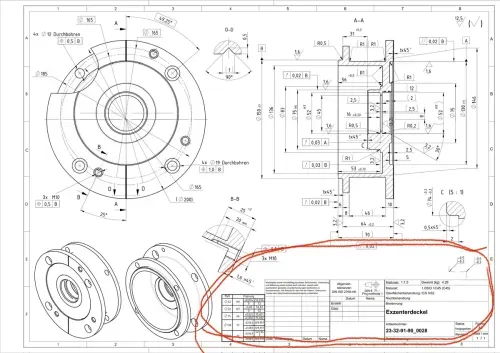
The title block is usually found in the bottom right corner and contains the essential administrative details:
Why it matters:
The revision level alone can make or break a job. A shop machining Rev B when the customer needs Rev D is a recipe for scrap. Always confirm the title block before anything else.
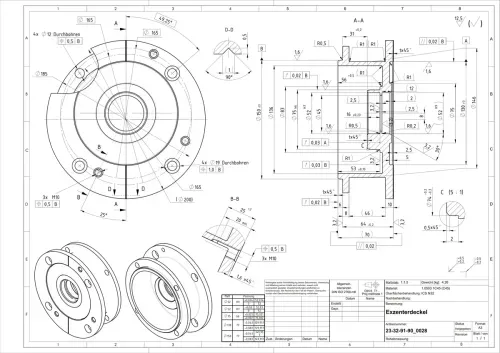
Most drawings use a combination of:
Each view shows different features so the machinist can understand the full geometry.
Tip: If something looks confusing in one view, check the others — the answer is usually there.
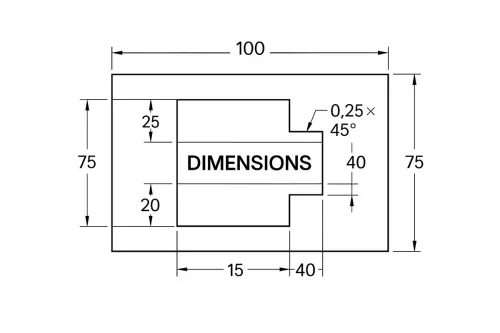
Dimensions tell the machinist exactly how big each feature should be.
Common types include:
Pro tip: Dimensions are not suggestions. They’re requirements — and the machine will be programmed to hit them.

You look silly if your suit is too big, but in the machining world, if a part doesn't fit correctly, it can be deadly. Tolerances define the acceptable range around a dimension.
For example:
Tighter tolerances increase machining time, inspection time, and cost — so they should only be used where function demands it.
At Adept we specialize in small, complex parts where tolerances matter. This is where craftsmanship and process discipline shine.
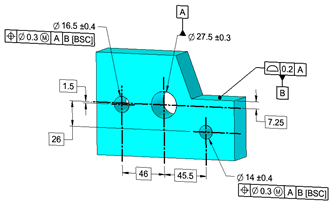
Geometric Dimensioning & Tolerancing (GD&T) uses symbols to define how a feature must behave in the real world — not just how it measures on paper.
Common symbols include:
GD&T helps ensure parts assemble correctly, function reliably, and meet performance requirements.
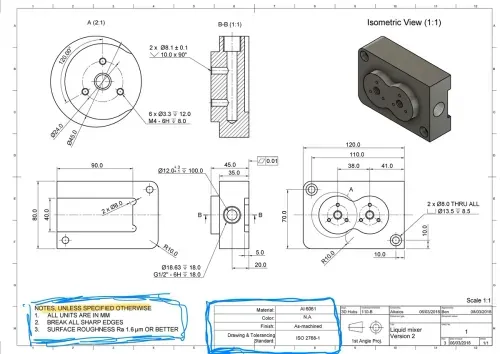
This is where designers specify:
And all of the details are in the blueprint. Knowing how to find the most important pieces of information and how they relate to the part you're making is the mark of a qualified machinist.