.png)
Not every part needs extreme precision. But when it does, the difference between a capable machining partner and an average one becomes critical.
Engineers often specify tight tolerances to ensure performance, fit, and reliability. Yet many components end up carrying unnecessarily restrictive requirements that increase cost, lengthen lead times, and complicate production without improving function.
Understanding when tight tolerances matter—and when they don't—can help teams build better products while controlling manufacturing costs.
Tolerance defines how much variation is acceptable from a specified dimension.
For example:
While every machine shop works to dimensional requirements, tight-tolerance machining pushes precision far beyond standard commercial manufacturing.
.png)
A dimension with a tolerance of ±0.005" may be relatively straightforward to produce. A requirement of ±0.0005" or tighter often demands:
For small, complex, and mission-critical components, these requirements are often necessary—but they should be applied only where the product demands them.
Shafts, bearings, bushings, and mating components often depend on precise dimensional control for proper operation.
Even minor variation can result in:
.png)
Medical equipment frequently contains small, highly engineered parts that must function consistently and safely.
High-precision features may affect:
In aerospace applications, dimensional accuracy directly impacts fit, weight, reliability, and performance.
Many components operate under extreme conditions where seemingly insignificant dimensional variation can become a significant risk factor.
Complex assemblies often rely on multiple components stacking together within very tight dimensional limits.
When each individual part drifts slightly off target, assembly issues can compound quickly.
One of the most common manufacturing mistakes is applying tight tolerances to every feature on a drawing. Over-specification can increase cost without providing any measurable benefit.
Examples include:
.png)
Dimensions that do not affect part function often do not require extreme precision.
Certain holes, pockets, or external geometries may have generous allowable variation while still performing exactly as intended.
Many dimensions communicate overall geometry and are not directly tied to assembly or performance. Engineers should identify the dimensions that truly affect functionality and focus tighter control where it delivers value.
Not every machine shop is built for the same type of work.
Some shops focus on large fabrications. Others specialize in prototypes. Some are optimized for high-volume commodity production.
At Adept Manufacturing, we focus on parts that align with our core philosophy: Small. Complex. Critical.
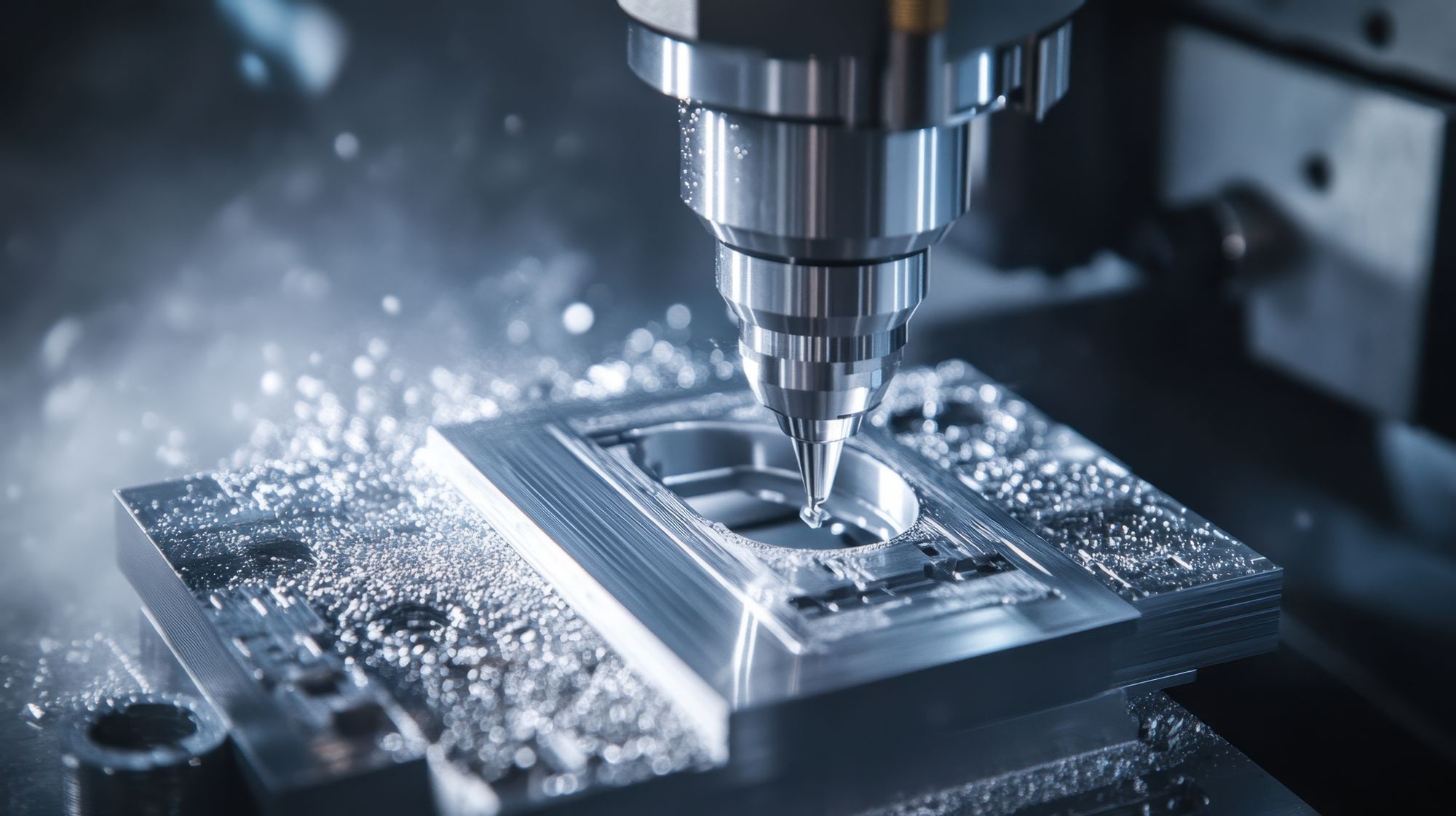
By concentrating on precision components under 12 inches, we have built processes specifically designed to support feature-dense, tolerance-sensitive work.
This specialized approach includes:
The result is greater consistency, reduced variation, and improved confidence throughout the life of your manufacturing program. By partnering with us as your small parts machine shop, you can rest assured that all of your parts will be made right, right on time, every time.
Precision machining requirements vary by industry, but many applications share similar demands for accuracy, repeatability, and reliability.
Examples of components commonly supported include:

Aerospace Components
Medical Device Components
Electronics Components
Firearm Components
In each case, manufacturing success depends on maintaining consistency from the first part through full production.

Successful production programs rely on quality systems that are integrated throughout manufacturing.
This includes:
By identifying potential issues early, manufacturers can minimize variation, reduce risk, and maintain confidence in production output.
The goal is not just to produce parts that meet print requirements once, it is to produce them repeatedly.
.png)
When components play a critical role in product performance, manufacturers need more than machining capacity.
They need confidence.
Confidence that:
That is why many engineering and procurement teams look beyond equipment lists and focus instead on specialization, process control, and proven execution.
Small parts are often the most demanding parts to manufacture. Their limited size, dense feature sets, tight tolerances, and critical performance requirements leave little room for error. Success requires more than advanced machinery—it requires repeatable processes, disciplined quality systems, and a team experienced in precision manufacturing.
At Adept Manufacturing, our focus is simple: Small. Complex. Critical.
We specialize in precision-machined components under 12 inches where accuracy, consistency, and execution matter most.
Have a tight-tolerance component that requires specialized machining expertise? Submit an RFQ and let's discuss your next project.